



What do we offer?
Manual therapy.
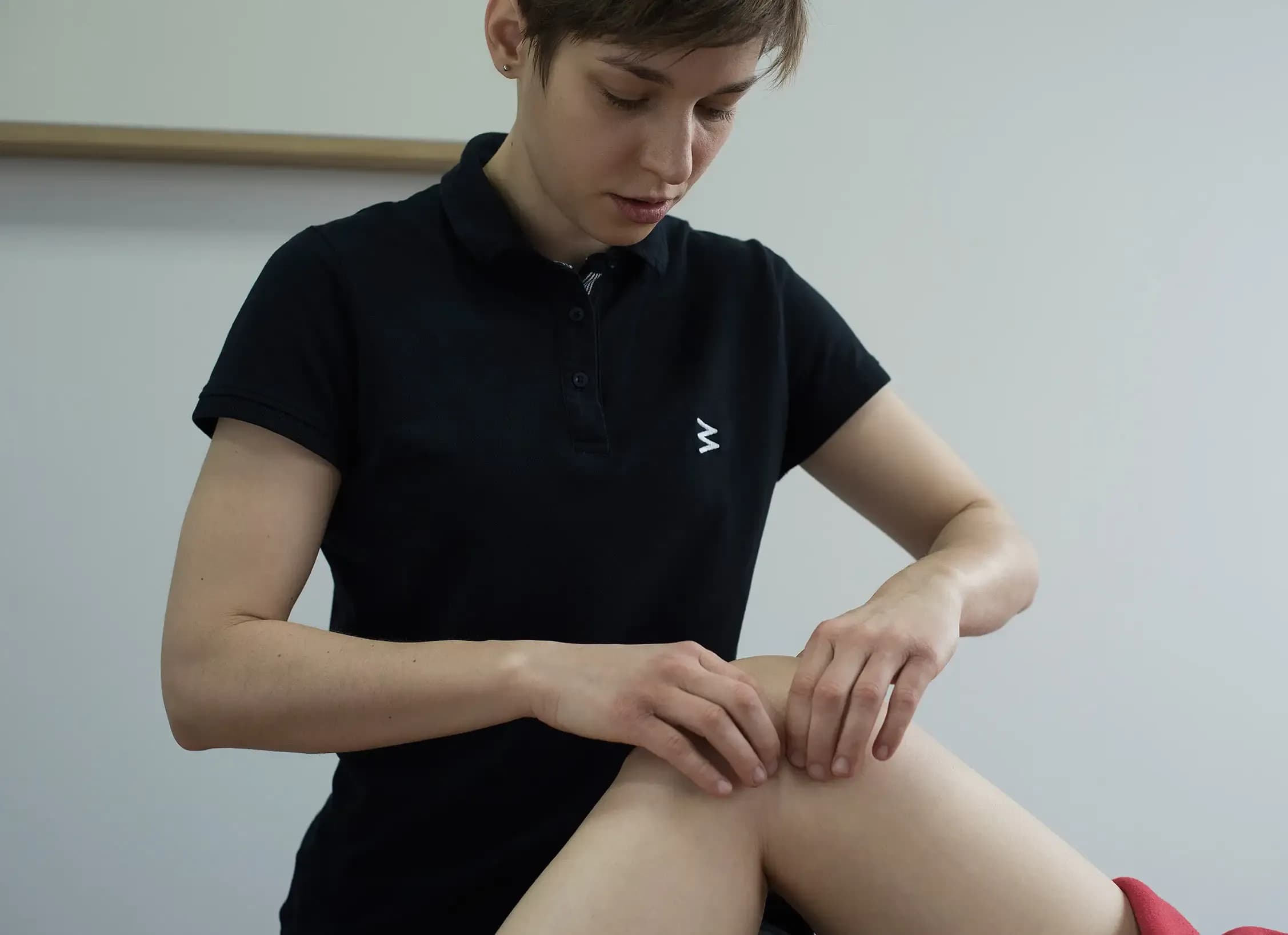

You're in good hands!
When can we help?
Manual therapy is an effective way of working with pain and restricted movement, based on precise assessment and individually chosen therapeutic techniques. Our physiotherapists combine knowledge of manual therapy with modern rehabilitation.
Tension headaches, as the name suggests, can result from excessive muscle tension in the shoulder girdle and suboccipital muscles, stress, emotional tension, dehydration, too little sleep or poor posture. These complaints make everyday life harder, prevent full concentration and reduce our productivity. They are widespread problems that we can work on through manual therapy of the affected structures, dry needling, strengthening training, education in the ergonomics of everyday movement and calming the body's tension with craniosacral therapy.
Pain in the cervical spine often affects people who work sitting down, but also manual workers and people after road accidents. It is often accompanied by pain radiating to the upper limbs, numbness in the hands, a feeling of reduced strength in the hands, dizziness, tinnitus or limited movement. These symptoms do not have to occur regularly. It often depends on the time of day, body position or the activity being performed, any of which can aggravate the pain. These complaints are often noticed at an advanced stage, when they make everyday life difficult. In that case you should see a physiotherapist to discuss the symptoms and undergo a full functional assessment. Once the problem has been verified, we can work mainly through manual therapy, soft tissue therapy, improving daily habits, patient education and, in particular, exercise.
This is a term that covers many complaints, starting with problems of joint, muscular or neurological origin resulting from nerve irritation, frozen shoulder, inflammation of the shoulder joint, subacromial impingement, instability of the shoulder joint, SLAP-type labral tears, inflammation of the long head of the biceps tendon and degenerative changes of the acromioclavicular joint (ACJ). Shoulder complaints may include: shoulder pain in the morning and at night, tenderness of the shoulder to the touch, restricted movement, a painful arc (60‑120° of arm abduction), pain when sleeping on the affected side, numbness of the hand, weakness of the arm, and swelling or redness of the joint. The shoulder is one of the more complex joints, so to identify the source of the pain precisely you should see a physiotherapist for a consultation and functional assessment. Sometimes an ultrasound scan is needed to complete the examination. Treatment consists of combining manual therapy techniques and soft tissue therapy with medical and strengthening training, learning work ergonomics and correct exercise technique, including in the gym.
This problem can affect athletes as well as people with a sedentary job. Contrary to the name, tennis players and golfers are not the main group affected. Tennis elbow is inflammation/enthesopathy of the wrist and finger extensors. Golfer's elbow is inflammation/enthesopathy of the wrist and finger flexors. It follows that these are conditions of muscle groups with opposing actions. Symptoms common to both complaints are: pain when gripping objects, weakened grip strength, tenderness of the lateral epicondyle of the humerus, tenderness of the medial epicondyle of the humerus, pain radiating to the wrist, stiffness after night-time inactivity, pain when working with a keyboard or mouse, and burning/numbness in the case of additional irritation of the deep branch of the radial nerve (PIN). Treatment consists of combining manual therapy techniques, soft tissue therapy, dry needling, EPTE (percutaneous electrolysis), medical training aimed at remodelling the tendon of the painful muscle, training that strengthens the shoulder girdle, learning work ergonomics, and daily use of an orthosis with a pad that compresses the given muscle group. In an acute condition, medication needs to be introduced after prior contact with an orthopaedist.
The wrist is a complex structure made up of many bones, tendons, ligaments, nerves and blood vessels. Symptoms in this area have varied origins. They can appear suddenly after an injury with sharp, troublesome pain, or gradually as a result of accumulated overload. The most commonly reported symptoms are: wrist pain on bending, after an injury, or during computer work, tingling, a feeling of lack of strength in the hand, reduced range of motion, difficulty with weight-bearing, and pain during racket sports. Wrist pain can be caused by many conditions: wrist fracture, wrist overload, sprain, dislocation, carpal tunnel syndrome, wrist arthritis, de Quervain's disease, rheumatoid arthritis of the wrist and wrist ganglion. Because of the complexity of this joint, it is recommended to consult a physiotherapist or orthopaedist about the complaints so that rehabilitation can start precisely. Treatment combines diagnostic imaging (X-ray, ultrasound, MRI) and functional diagnostics with manual therapy, soft tissue therapy, dry needling, EPTE (percutaneous electrolysis), medical training, patient education and work ergonomics.
The term lower back pain covers complaints from the lumbar and sacral spine, sacroiliac joints, pelvic floor, hips or other systems of the human body. These are problems that will probably affect each of us, since statistically this is the most common cause of musculoskeletal pain. Complaints reported by patients are: pain on flexion/extension, difficulty moving, pain when changing position in bed, pain on the first movements after rest, numbness, pain radiating to the lower limbs, reduced muscle strength in the lower limbs, pain when driving, pain when lifting, and urinary incontinence. The cause of these symptoms may be: lumbar disc herniation (discopathy), sciatica, degenerative changes of the lumbar spine, overload of the lower back muscles, back pain caused by postural defects, back pain related to osteoporosis, lumbar radicular pain without a clear cause (non-specific low back pain), back pain that may suggest other conditions (for example kidney or vascular), and a change in body biomechanics related to weight or pregnancy. The main action in the above difficulties is a visit to a physiotherapist who, after a thorough interview and functional examination, will determine the region of the complaint. They will then perform the appropriate type of manual therapy, soft tissue therapy or dry needling, and then select exercises and training, which are a key part of treatment in this area. In the case of worrying symptoms the physiotherapist will indicate next steps such as imaging tests or a visit to a specialist doctor to choose medication supporting recovery.
Coxarthrosis, that is, degeneration of the hip joint, is chronic degeneration of the articular cartilage. Complaints reported by patients are: hip pain radiating to the knee, crepitus in the hip joint, stiffness of the hip joint, loss of mobility in the hip, difficulty crossing the leg, limping when walking, limited hip abduction/rotation, muscle wasting in the affected limb, and groin pain. The most common cause of degenerative disease is many years of permanent overload of the hip joints, postural defects, Perthes disease and other systemic diseases that indirectly affect the joints. Treatment depends on the stage of coxarthrosis. In the case of initial complaints, the main action is to perform exercises selected by the physiotherapist, manual therapy, soft tissue therapy and improving movement ergonomics. In a state of significant joint degeneration, an orthopaedist's opinion is required, who may recommend intra-articular injections of hyaluronic acid, plasma or steroids, pharmacotherapy, or indicate surgical treatment. At this stage, cooperation with a physiotherapist is also recommended.
Knee pain is the second most common musculoskeletal complaint among the population. The phrase "knee pain" is too broad a term for the variety of problems with this joint. In most cases patients describe their symptoms as: knee pain when going down stairs, on bending, at the front/back of the knee, knee pain after running, after exertion, at night, after rest, knee stiffness, and clicking in the knee. These are very general clues, behind which various diagnoses may hide. Examples include: knee joint inflammation, chondromalacia patellae, meniscus damage, knee ligament damage, knee overload, knee pain radiating to the calf resulting from spinal problems, and also knee degeneration of varying severity. That is why we start treatment with a consultation with a physiotherapist who, after a functional assessment, can perform an ultrasound scan (completing the diagnosis) to confirm the problematic structure. The next stage is manual therapy, soft tissue therapy, dry needling, medical training and learning movement ergonomics. In acute cases a visit to an orthopaedist is required, who may offer further imaging, intra-articular injections of hyaluronic acid, plasma or steroids, pharmacotherapy, or indicate surgical treatment. At this stage, cooperation with a physiotherapist is also recommended.
The Achilles tendon is the shared tendon of three muscles: the gastrocnemius, soleus and plantaris. This structure gives it a strength of up to 7 times body weight. Despite the large loads it takes, there are cases of overload and even rupture of the Achilles tendon. The most common causes of pain from this structure are: sudden starts and sprints, insufficient strength and mobility relative to the loads taken, a sudden return to sport, and a change of footwear that gives much more push-off when running, for example a carbon sole. Often the episode of damage is minor and so we downplay the problem, which causes further micro-damage to accumulate and, as a consequence, a serious injury or inflammation. Pain when walking, swelling, tenderness around the Achilles, limited mobility in the ankle joint, a feeling of "cracking" when moving, and stiffness and pain when running are symptoms often reported by patients. The physiotherapist determines the approach after taking a history and examining the patient. It may include ultrasound diagnostics, manual therapy, soft tissue therapy, dry needling, EPTE (percutaneous electrolysis) and an individual medical training plan. Exercises performed independently are part of the agreed plan. In the case of severe damage, a visit to an orthopaedist is required, who will determine the severity of the injury and the need for surgery, and select medication.
The foot, like the wrist, consists of bones of varied shapes, tendons, ligaments, nerves and blood vessels. This small complex of joints carries half of our body weight, hence the frequency of injuries in this area. Ankle sprains are very common, and less so: fractures, joint overload, flat feet, Lisfranc joint injuries, plantar fasciitis, bunions and congenital foot deformities. The most commonly reported symptoms are: pain, swelling, bruising, difficulty walking, deformity, heel pain, morning stiffness, "clicks", difficulty flexing the foot, and numbness. Because of the complicated structure of the foot, a consultation with a physiotherapist is important for diagnosis, ultrasound (completing the diagnosis), manual therapy, soft tissue therapy, dry needling, EPTE (percutaneous electrolysis) and a medical training plan aimed at speeding up recovery and the return to full physical fitness. In the case of severe damage, a visit to an orthopaedist is required, who will determine the severity of the injury and the need for surgery, and select medication.
How do I book a visit?

Sign up for our newsletter.
Stay in the loop.
BODYWORK GROUP Sp. z o.o., ul. Samuela Lindego 4, 60-573 Poznań, info@body-work.pl, is the controller of your data. We share it with our email service provider, and you may complain to the President of UODO, the Polish data protection authority. Details and the retention period are in the privacy policy.